
Table of Contents
How to Choose a Reliable Vendor for Bulk Product Image Editing?
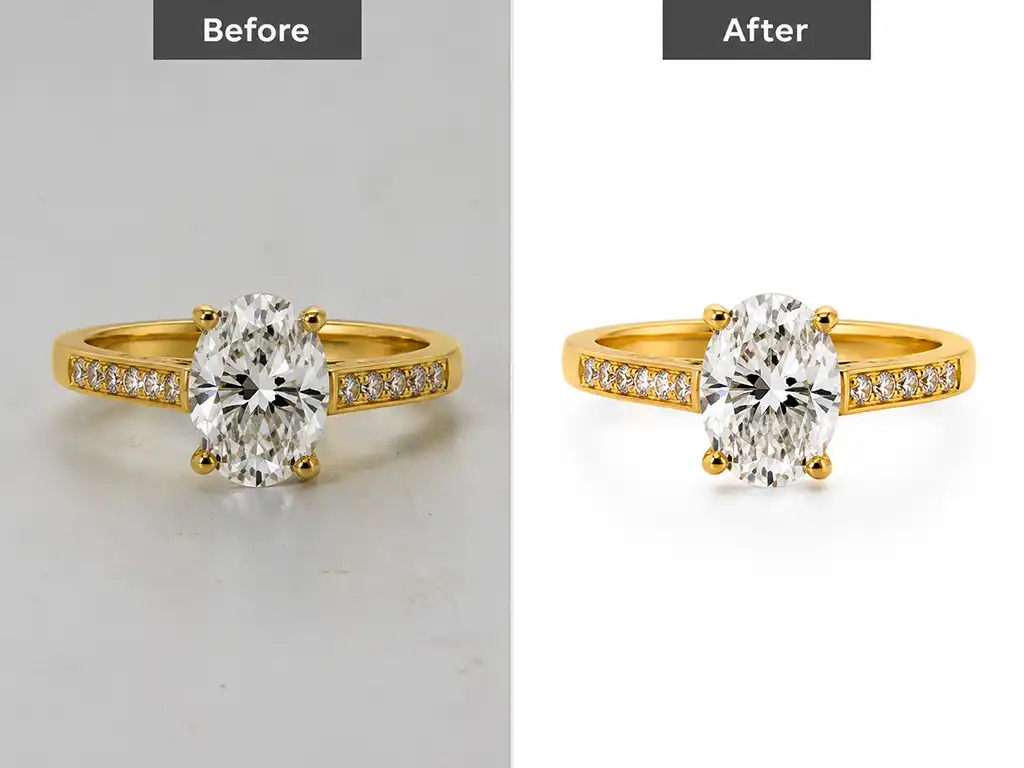
A boutique jewelry brand in Austin once sent 4,000 ring and necklace photos to an overseas editing vendor the week before a major site relaunch. The quote looked great. The turnaround promise looked even better. Then the files came back: backgrounds that were almost-but-not-quite pure white, inconsistent shadow angles between products from the same collection, and a metal tone that looked slightly green under certain monitors. The relaunch got pushed back ten days while an in-house team scrambled to fix what should have been done right the first time.
This is the story behind almost every search for bulk product image editing vendors. It’s rarely about finding a company that can edit photos — plenty can. It’s about finding one that won’t quietly cost you a launch date, a returns spike, or a brand reputation built over years.
If you’re a product photographer, ecommerce store owner, fashion or jewelry brand, agency, manufacturer, or Amazon/Shopify/Etsy seller relying on ecommerce image editing services to get hundreds or thousands of images that all need the same polished, consistent look, this guide walks through exactly how to vet a vendor before you hand over your catalog.
Quick Answer
To choose a reliable vendor for bulk product image editing, check three things first: a free trial batch on your actual images, a clear turnaround time backed by sample work, and transparent per-image pricing with no hidden revision fees. Confirm they understand your specific platform’s image rules (Amazon, Shopify, Etsy), have a documented quality-control process, and protect your files with a confidentiality or NDA policy.
Why Vendor Choice Matters More Than Most Sellers Realize
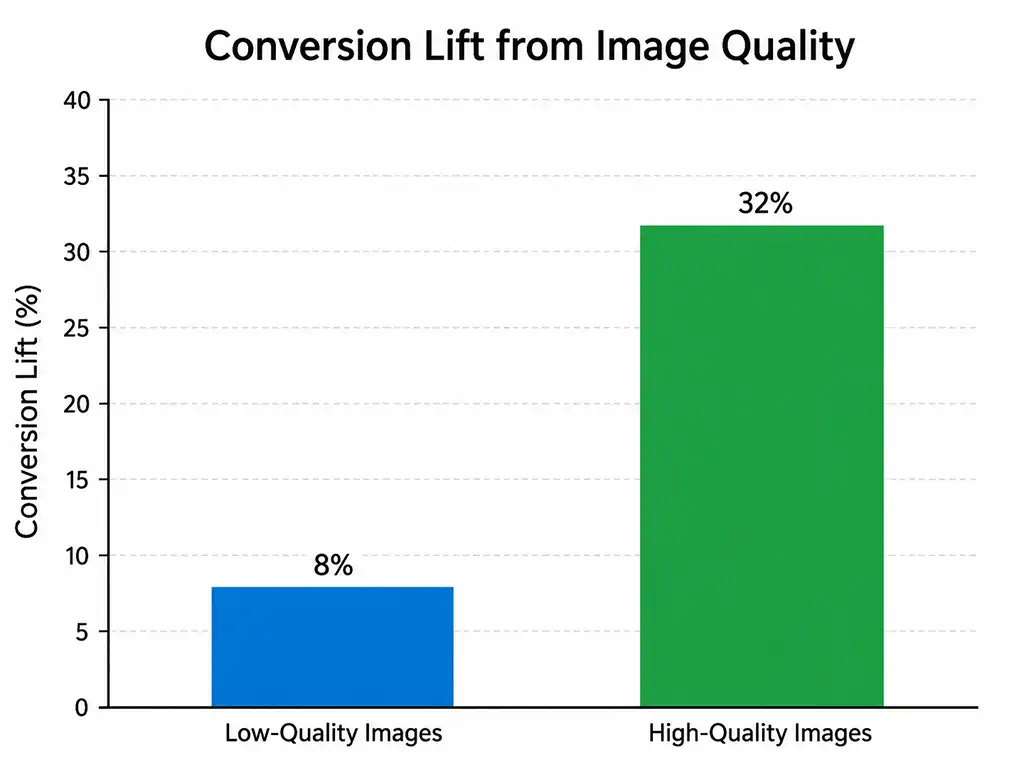
Product images aren’t decoration — they’re often the deciding factor in whether someone buys. A 2025 Salsify consumer research report found that 77% of shoppers say high-quality images and videos are important to their purchase decisions. Other research puts the conversion lift from high-quality images as high as 40%, with 67% of consumers saying image quality matters more to them than product descriptions or customer ratings.
The flip side matters just as much. Online return rates hit 16.9% of total retail sales in 2024, representing roughly $890 billion in returned merchandise in the US alone, according to the NRF/Happy Returns report — and 71% of consumers say they’ve returned products because the actual item didn’t match the description. A vendor that edits color inaccurately or crops out important details isn’t just making your photos look worse. They’re actively contributing to returns you’ll pay for later.
This is the real stakes of choosing a product image editing vendor: it’s not just a cosmetic upgrade, it’s a business decision with measurable downstream cost.
Step 1: Ask for a Trial Batch on Your Own Images
Any vendor worth hiring should be willing to edit a small sample set — five to twenty of your actual product photos — before you commit to a bulk order. This single step eliminates most bad fits immediately.
What to check in the trial:
- Does the white background read as pure white, not off-white or gray-tinted?
- Are shadows consistent across similar product angles?
- Do colors match the real product, especially for jewelry, fabric, and skin-tone-sensitive items?
- Are crops and proportions consistent across the batch, not just within one photo?
Several established bulk editing providers already build this into their process precisely because it builds trust before a large order. One bulk editing service notes they offer a free trial so clients can evaluate quality before placing a full order. If a vendor resists this or charges heavily for a trial, treat it as a warning sign, not a dealbreaker by itself.
Step 2: Confirm They Understand Platform-Specific Image Rules
This is where many otherwise competent editing vendors fail bulk ecommerce clients. Generic product photo retouching skills don’t automatically translate into marketplace compliance.
Amazon, for instance, has some of the strictest and most specific main-image rules in ecommerce:
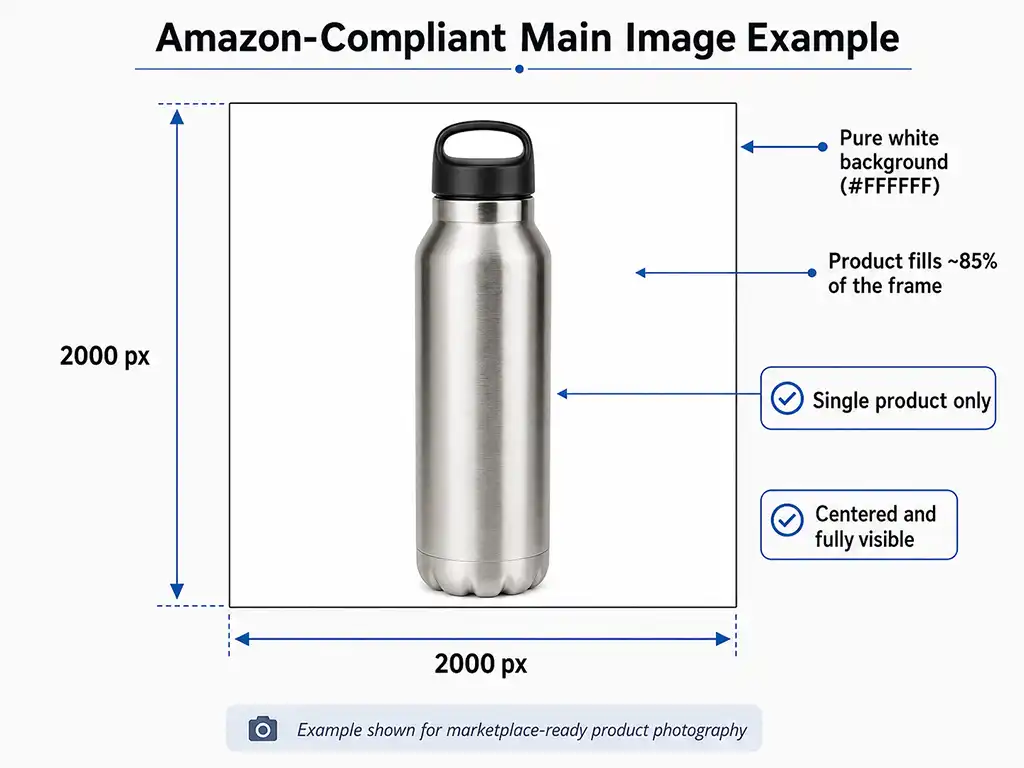
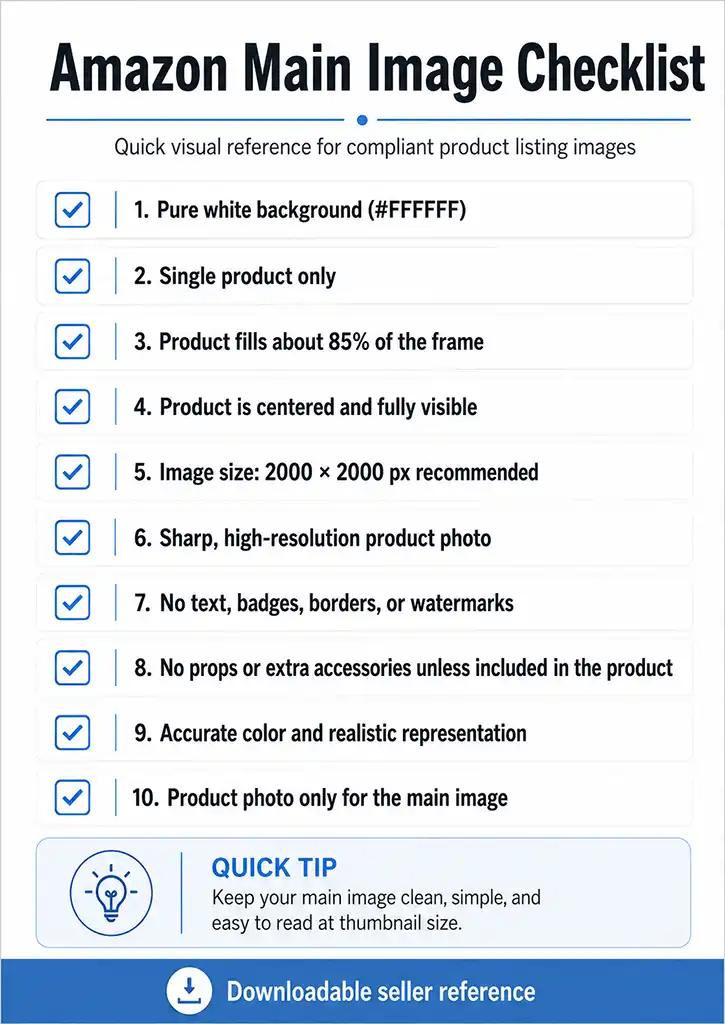
- A pure white background at RGB 255, 255, 255, with the product filling at least 85% of the frame and no borders, watermarks, or text
- A minimum image size of 1,000 pixels on the longest side, with 2,000+ pixels recommended for zoom functionality
- No layered files — layers must be merged before the final image is saved, or Amazon will reject the upload
Shopify and Etsy are more flexible on background color but still expect consistent dimensions, fast-loading file sizes, and a cohesion across your storefront that builds buyer trust. Fashion and apparel sellers in particular should confirm the vendor offers ghost mannequin editing, since invisible-mannequin effects are one of the most commonly mishandled edits in bulk apparel batches. A reliable vendor for bulk product image editing should be able to tell you, unprompted, which platform rules apply to your catalog — not wait for you to catch their mistakes after delivery.
This is also where a bulk photo editing service like Clarity Edit fits into the picture: rather than offering one-size-fits-all editing, a good vendor adjusts background removal, cropping, shadow creation, dust and spot removal, and color correction to match the exact specs of the platform you’re selling on, whether that’s Amazon’s white-background rule or a Shopify brand style guide.
Step 3: Understand Real Turnaround Times — and Be Skeptical of Extremes
Turnaround time is one of the easiest things to overpromise and one of the most damaging to get wrong, especially when bulk image editing is on a tight deadline.
Industry data gives a useful baseline. Standard human-based editing for basic corrections typically runs 24-48 hours, while AI-assisted services can turn images around in minutes. Larger bulk-focused providers report being able to deliver tens of thousands of images within a 12-24 hour window, but that pace usually depends on order volume, complexity, and how many editors are assigned.
A few questions worth asking directly:
- What’s the turnaround for a batch of your size, not a generic minimum?
- Does turnaround change for complex edits like object removal or ghost mannequin work versus simple background removal?
- What happens to your timeline if revisions are needed?
Even with quality vendors, a 3-5% revision rate is common with manual editing services — so build that into your expectations rather than treating any revision request as a vendor failure.
Step 4: Get Clear, Transparent Pricing — Including for Revisions
This is exactly why bulk image editing pricing varies so much., and that range itself tells you something important.
- Standard corrections like cropping and color balance generally cost $0.20 to $0.50 per photo
- Some bulk-focused providers price as low as $0.24 per image at scale, often with bulk-order discounts up to 25%
- More detailed work — skin smoothing, object removal, complex masking — typically costs $5.00 to $15.00 per photo or more
If a quote seems far below this range for complex work, ask exactly what’s included. Cheap pricing on detailed retouching usually means either lower quality, AI-only processing without human review, or hidden charges for revisions later. A trustworthy vendor will break down pricing by service type — background removal, shadow creation, color correction, retouching — rather than giving one vague flat rate for “editing.”
Step 5: Check Their Quality Control Process
Bulk orders fail most often not because one photo looks bad, but because consistency breaks down across hundreds of images. A reliable vendor should be able to describe their actual QC workflow, not just claim “we check everything.”
Look for signs of a real process:
- Multiple reviewers checking a batch before delivery, not just the original editor
- A documented style guide they build from your brand requirements
- Sample comparisons (before/after) provided as proof of consistency across a full batch, not just hero shots
Some providers describe a three-step quality control process applied consistently to every order, which is the kind of detail worth asking for directly rather than assuming exists.
Step 6: Confirm File Security and Confidentiality
For agencies, manufacturers, and brands handling unreleased product lines, file security isn’t a minor detail — it’s a real business risk. Ask whether the vendor has a signed NDA option, how files are stored, and whether they’re deleted after project completion. Reputable vendors typically commit to handling client images with confidentiality protections built into their standard process, and this should be something they offer proactively, not something you have to request after the fact.
A Quick Vendor Evaluation Checklist
Before signing a bulk contract, confirm the vendor offers:
- A free or low-cost trial batch on your real images
- Clear understanding of your platform’s image specs (Amazon, Shopify, Etsy)
- A stated turnaround time matched to your order size
- Transparent, itemized pricing by service type
- A documented quality control process
- Confidentiality or NDA protections for your files
- Sample before/after work specific to your product category (jewelry, apparel, furniture, etc.)
How Clarity Edit Fits Into This Process
For sellers who’d rather skip the trial-and-error of vetting multiple vendors, Clarity Edit’s product photo editing work specifically supports product photographers, ecommerce brands, fashion and jewelry sellers, agencies, manufacturers, and Amazon, Shopify, and Etsy sellers on the exact pain points covered above — clean background removal, platform-specific cropping, realistic shadow creation, dust and spot removal, and accurate color correction — all built around consistency across large batches rather than one-off edits.
Frequently Asked Questions
Most vendors define bulk orders starting around 50-100 images, though true volume pricing and discounts usually kick in at 500+ images. Always confirm where a specific vendor’s bulk threshold begins.
AI tools handle repetitive tasks like basic background removal quickly and affordably, but complex work — fine jewelry details, fabric texture, ghost mannequin effects — generally still benefits from human review for accuracy and consistency.
Standard manual editing typically takes 24-48 hours for moderate batch sizes, with some bulk-focused vendors offering 12-24 hour delivery depending on volume and complexity.
Often yes. Amazon requires strict pure-white backgrounds and specific pixel minimums for main images, while Shopify and Etsy allow more creative freedom in styling and background choice.
Compare quotes against published industry ranges — roughly $0.20-$0.50 per image for basic edits and $5-$15+ for advanced retouching — and ask for an itemized breakdown rather than accepting a single flat number.
Reliable vendors include a reasonable number of revision rounds in their standard pricing. Ask this before placing a bulk order, since revision policies vary significantly between providers.

Conclusion
Choosing a vendor for bulk product image editing isn’t about finding the cheapest quote or the fastest promised turnaround — it’s about finding a partner who can prove consistency, transparency, and platform knowledge before you ever hand over your full catalog. A trial batch, clear pricing, a real QC process, and file security aren’t extra steps to skip when you’re in a hurry; they’re the exact things that prevent the kind of last-minute scramble that boutique jewelry brand in Austin went through. Ready to stop guessing and start vetting? Get a quote and run your own trial batch before your next order goes out — but which of these checks have you actually confirmed with your current or prospective vendor?